Tremendous opportunities in meat goats

By Bob Reid
Ontario Farmer
STRATFORD – A rising and fairly consistent market for meat goats has caught the eye of a government beef and sheep specialist.
“If beef guys were getting that kind of money they would be capitalizing on the opportunity,” said Christoph Wand, beef and sheep nutritionist with Ontario Ministry of Agriculture, Food and Rural Affairs (OMAFRA). He was referring to the $150 per hundred weight average price for live goats since the end of the BSE scare.
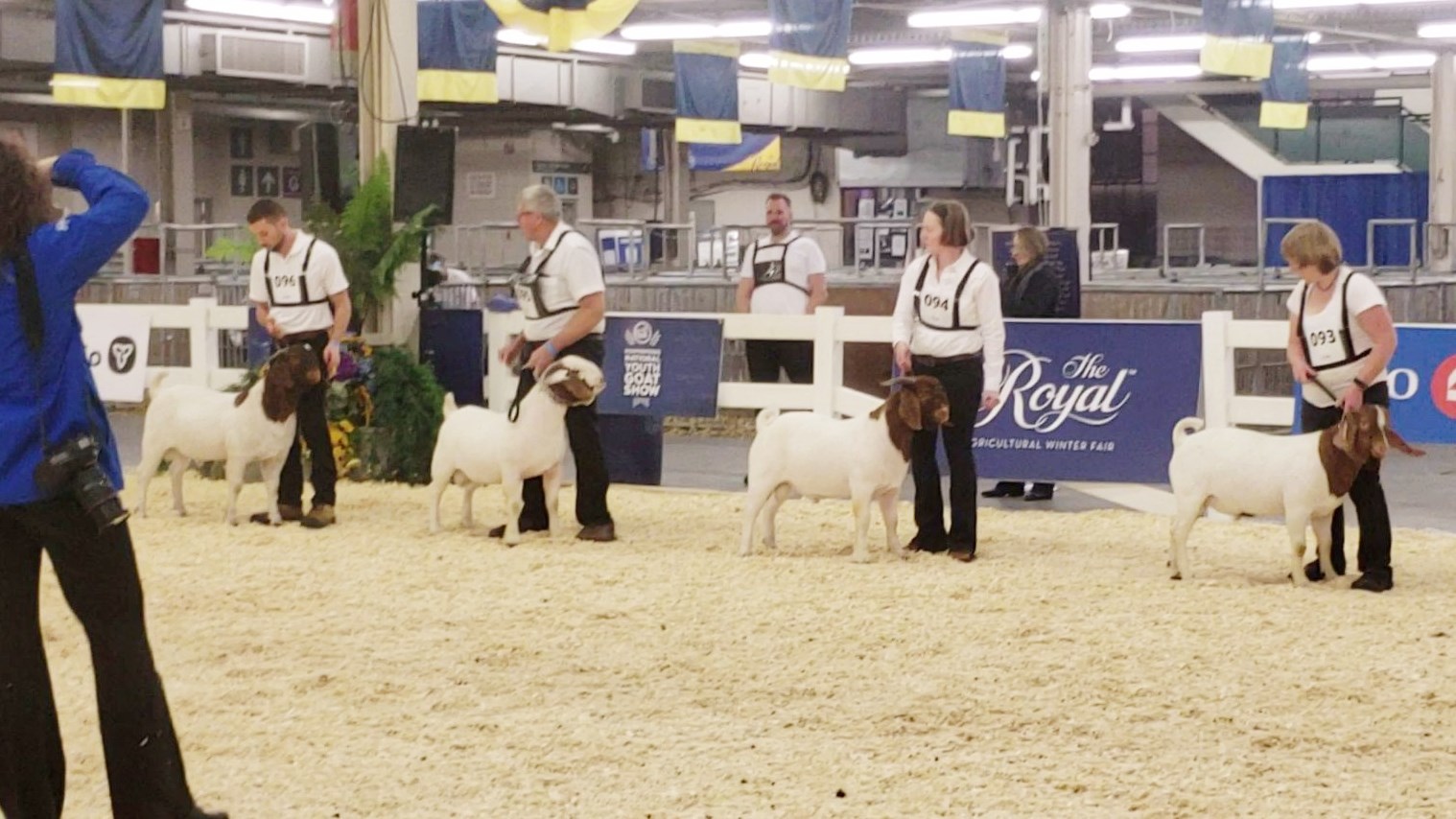
Wand was addressing participants in a two day conference hosted recently in Stratford by the Canadian Meat Goat Association.
Data collected by OMAFRA showed that the traditional dramatic seasonal variation in prices around Christmas and Easter for goats has “tightened up,” said Wand. “Prices have been fairly consistent and have been rising over time.”
An undersupply of domestic animals has contributed to the better prices for goats. However, Wand warned producers that shorting the market for too long a period at too high a price might result in the retail market going to other meat products.
Wand displayed a series of pictures taken from a visit he made to Texas featuring large feedlots of sheep and goats, raised in a low cost of production environment.
He cited labor costs as the biggest challenge to Canadian producers in competing with other meat products or other countries producing goat meat.
Identifying those labor cost can then only be done through carefully examining cost of production.
Wand suggested feeding female replacements a lower energy diet than the diet fed to kids destined for market. He used the difference between feeding a veal calf as opposed to feeding a heifer calf for replacement as a similar situation.
“Don’t push females as hard,” said Wand.
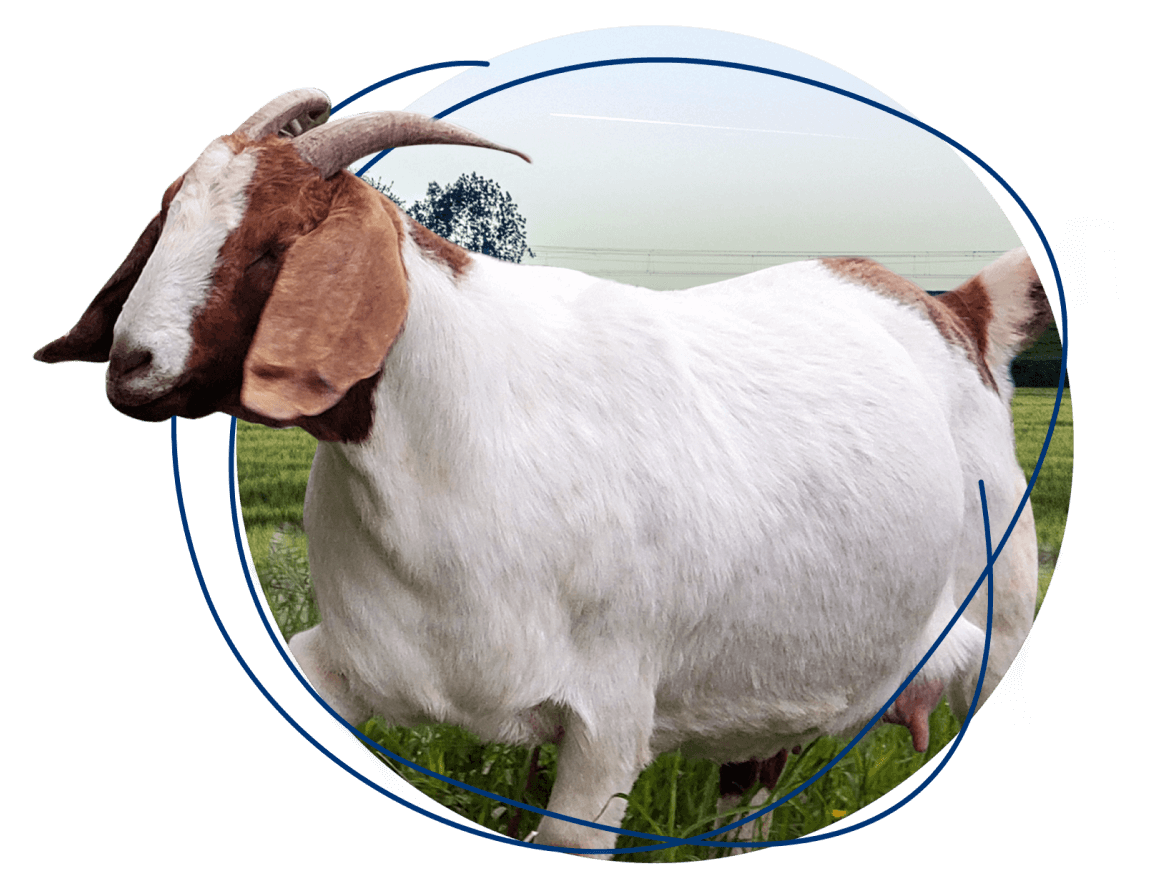
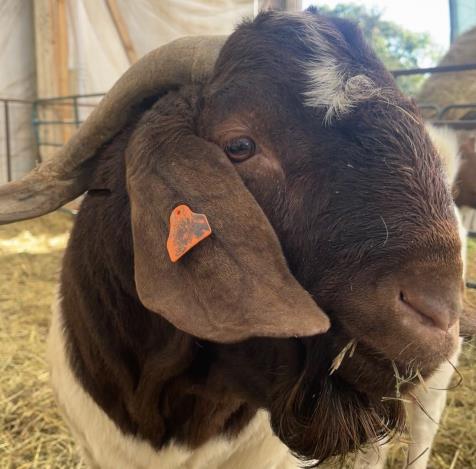
Acknowledging that Boer goat breeders often admire the magnificent sweep of the horns on a mature animal, Wand suggested they are a hindrance in developing a system for feeding goats forage in the winter months without having a lot of waste.
It is a problem the large herds in Texas don’t have because of having the animals in a pasture situation year round.
Developing a polled Boer goat would be a tremendous advantage in not only feeding the goats but eliminating the labor cost of dehorning. Wand noted that developing polled breeds had already been accomplished in both sheep and beef animals.
He stressed keeping the cost of production down as successful goat operations in Texas appeared to be doing through simple, efficient feeding systems.
“There are tremendous opportunities (in meat goats) but don’t reinvent the wheel,” stated Wand.